

Program catalog

Applied AI programs.
Built for real outcomes.

NAAI partners with university labs and AI engineering teams to offer research mentorships, industry studios, and hands-on training programs.

Inquire about a program
AI-generated illustrative scene of researchers and students collaborating on applied AI
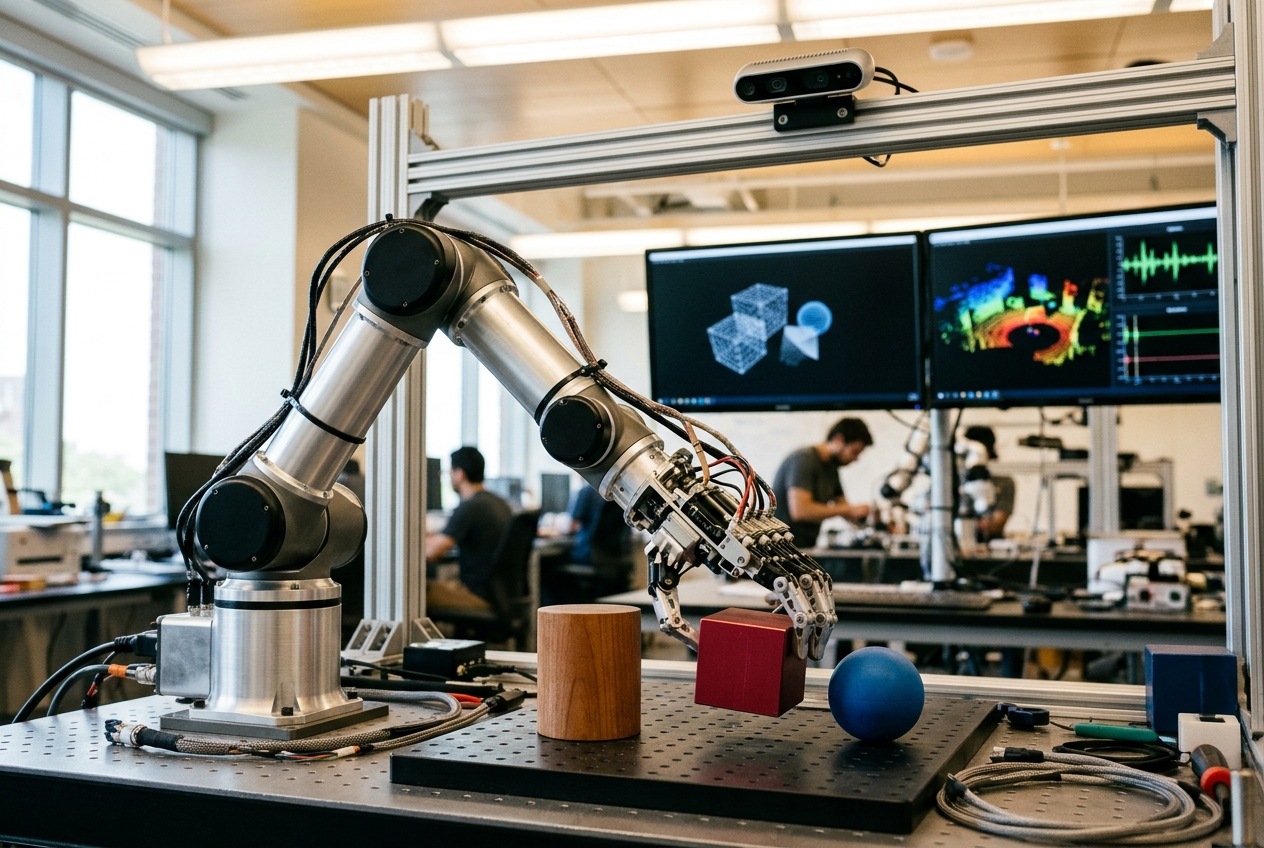
Robotic dexterous hand and 3D physics simulation monitors in a university robotics lab
Research · AI & Robotics Open for Inquiry

UBC Embodied AI Research Program

Prof. Peter Yichen ChenAssistant Professor of Computer Science, UBC · Director, PhysAI Lab · MIT CSAIL Postdoc · SIGGRAPH 2025 Best Paper co-author

Investigate how robots act in the physical world through world models, physics simulation, and hands-on research-grade dexterous hand manipulation at UBC Vancouver.

16 Weeks Winter Break Online + Jan UBC Weekend Lab 1-on-1 Paper & Faculty LOR

Research Directions & Deliverables

  • Dexterous GraspingGrasping diverse objects steadily with a single dexterous hand across shapes and surfaces.
  • Sim-to-Real GapDiagnosing why simulation succeeds while physical hardware tests fail.
  • Pose GeneralizationEvaluating grasp policy resilience when object position or orientation shifts.
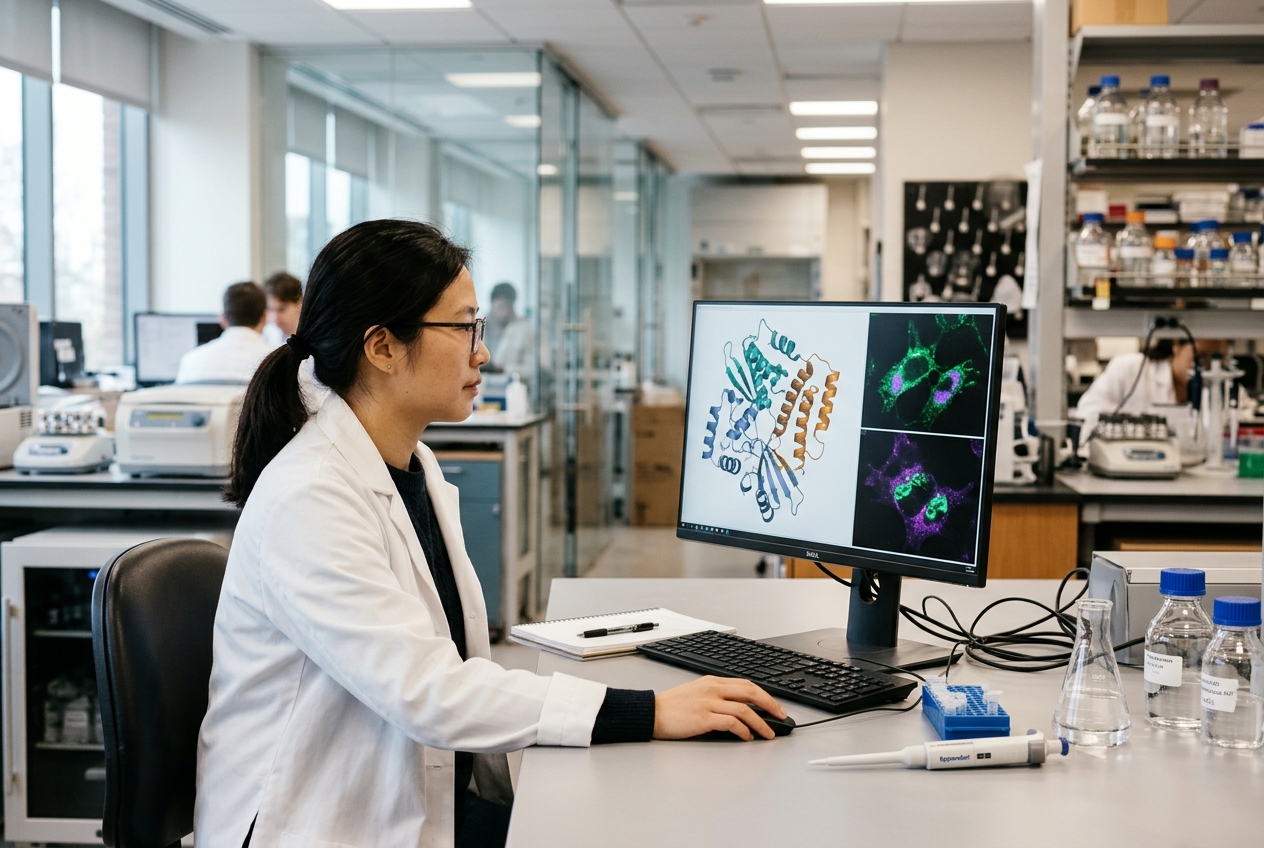
Researcher examining 3D protein structures and cellular visualizations in a computational biology lab
Research · AI & Biomedicine Open for Inquiry

UBC AI & Biomedical Research Program

Prof. Henry KilgoreAssistant Professor, UBC Pharmaceutical Sciences · MIT PhD & Whitehead Postdoc · Published in Science & Nature Chem. Bio.

Explore how AI uncovers molecular rules from protein sequences—comparing model predictions against biological evidence for subcellular localization and disease research.

16 Weeks Winter Break Online + Jan UBC Weekend Sessions 1-on-1 Paper & Faculty LOR

Research Directions & Deliverables

  • Protein LocalizationPredicting where proteins localize inside cells using public biological datasets.
  • Sequence VariationsAnalyzing how sequence mutations alter protein destinations in cellular environments.
  • Disease InsightsConnecting molecular distribution patterns to therapeutic and disease mechanisms.
Computer science researchers analyzing software verification graphs and reliability metrics on dual monitors
Research · Trustworthy AI Open for Inquiry

UBC Trustworthy AI Research Program

Prof. Julia RubinProfessor of ECE, UBC · Canada Research Chair in Trustworthy Software · Former IBM Research Lead · ACM SIGSOFT Award 2026

Examine errors in AI-generated code, software security, and system reliability—evaluating robustness, explainability, and fairness beyond “code that runs.”

16 Weeks Winter Break Online + Jan UBC Weekend Sessions 1-on-1 Paper & Faculty LOR

Research Directions & Deliverables

  • AI Code ReliabilityIdentifying edge-case failures in runnable AI-generated programs.
  • Robustness Under ShiftStudying how high-performing AI models degrade under new input conditions.
  • Security Scanner LimitsAnalyzing false positives and missed vulnerabilities in automated security tools.
Developers and mentor collaborating on an AI learning platform in a Vancouver tech studio
Industry Studio · Product & GPU Open for Inquiry

AI Product Studio & Future Innovators

Vancouver / Richmond Engineering TeamHosted with IntelliPath AI Academy Ltd. · Lantern Atlas Platform · NVIDIA H100 / A100 / RTX A6000 Infrastructure

Work inside a live AI engineering team building the Lantern Atlas adaptive learning platform. Choose between the 6–8 week intensive AI Product Studio (Grade 9–11 & College Year 1–3) or the 4-week Future Innovators Industry Experience (BC Grade 9–12, 12–60 guided hours).

4 Weeks or 6–8 Weeks Vancouver In-Person Demo Day · Performance & NAAI LOR

Available Tracks & Formats

  • 6–8 Week Product Studio (USD 5,000)Dual tracks (Research or Build), real pre-launch product backlog, ~30 hrs/wk, Demo Day & selective NAAI LOR.
  • 4-Week Future Innovators (12–60 hrs)Discover → Explore → Build → Present across AI/ML, Software Eng, Product/UX, and GPU Infrastructure.
  • Included InfrastructureAccess to multi-GPU server demonstrations, self-hosted vs. commercial model testing, and project portfolio artifacts.

Educational Standards & Approach

Four core pillars behind every program.

Our curriculum design pairs technical depth with verifiable reasoning—ensuring learners build lasting capability rather than chasing short-lived tools.

NAAI curriculum and assessment framework
AreaLearning focusDemonstrated outcome
AI foundationsModels, training, inference, uncertainty, and system limitations.Explain a system’s purpose and identify where its output needs checking.
Data & evaluationData quality, representative examples, measurement, and error analysis.Compare outcomes using a documented evaluation set.
Applied workflowsTool selection, iteration, reproducibility, and human review.Build an end-to-end workflow and defend the engineering decisions behind it.
Responsible participationPrivacy, attribution, robustness, and proportionate safeguards.Identify edge-case risks and document practical mitigations.

Program Inquiry

Looking for the next cohort or a specific syllabus?

Share the student’s grade or university year, background, and the program you are interested in—our team will follow up directly with current cohort dates and details.

NAAI

North American Artificial
Intelligence Association