
Focus on Enduring Skills
Panelists agreed that while models and tools change quickly, the basics—clear thinking, coding discipline, and problem decomposition—never go out of style. Strong foundations make it easy to adapt.
Community & Field Engagements
From 400+ attendee academic summits at UBC to a growing North American AI club network, we connect students, educators, and builders with practical computing support.
Connect your club or propose an event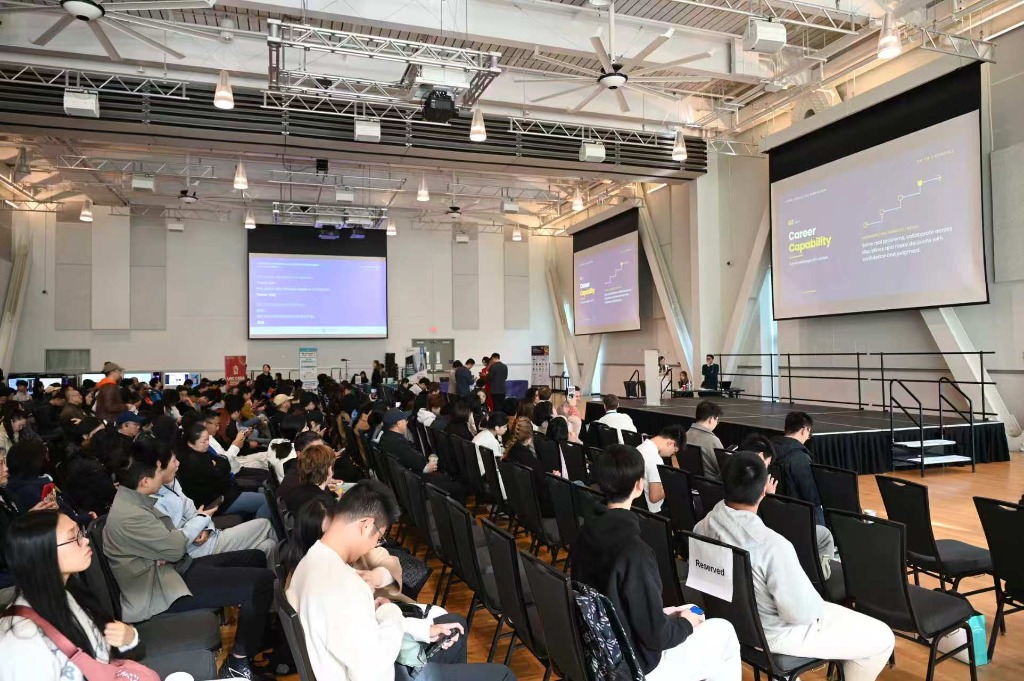
Summit Recap
Vancouver, BC · UBC Nest · October 18, 2026
Focusing on practical skills, real problem-solving, and non-profit computing support.
On October 18, 2026, the Global AI Innovation & Future Leaders Summit (GAIFLS) brought together more than 400 high school students, university undergraduates, educators, researchers, and tech practitioners at the University of British Columbia (UBC) Nest in Vancouver. The day was dedicated to a candid conversation about how artificial intelligence is changing education and how young people can find their footing in a fast-moving field.
As an open, non-profit organization, the North American AI Association (NAAI) joined the summit to share practical guidance. Director Claude Zang delivered a keynote presentation and participated in the industry roundtable. We also set up an interactive booth where attendees could try out the association's computing platform and explore real AI project demos.
Keynote Presentation
Delivered by Claude Zang, Director of the North American AI Association.
With generative AI tools and chatbots now accessible to almost anyone with an internet connection, Claude addressed a straightforward question: how can students build genuine, lasting capability instead of just reacting to the latest tool?
"Using existing AI tools is just the starting line today. The real difference is knowing when a system is wrong, having the discipline to guide it, and using it to solve problems that actually matter."— Claude Zang, Keynote Address at UBC Nest
Roundtable Discussion
A cross-sector conversation about technology shifts and where opportunities lie for youth.
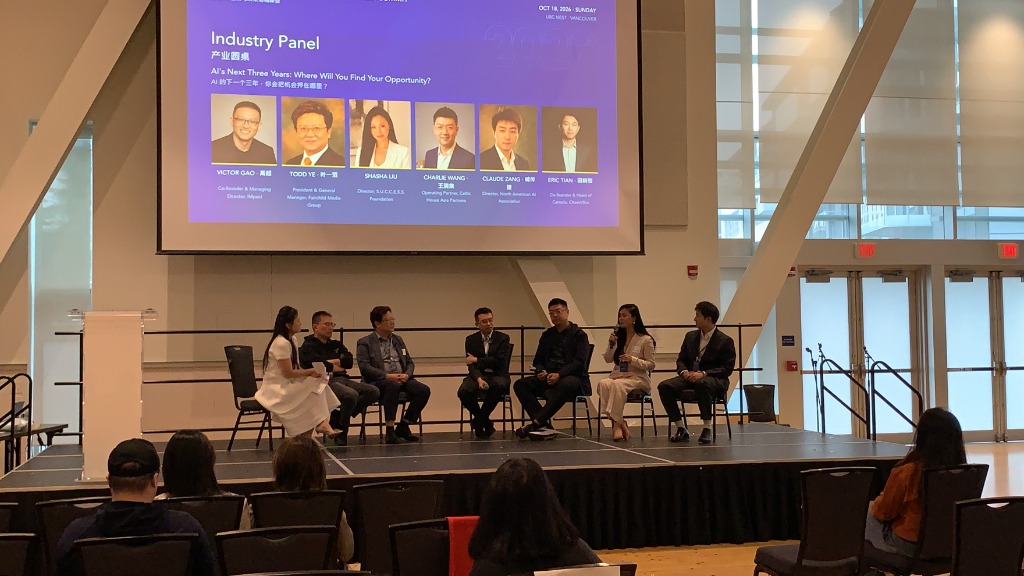
Panelists agreed that while models and tools change quickly, the basics—clear thinking, coding discipline, and problem decomposition—never go out of style. Strong foundations make it easy to adapt.
AI isn't just for computer science majors. Combining AI with biology, business, humanities, or social initiatives often creates the most practical and original projects.
Claude emphasized that learning in a vacuum is tough. Joining student clubs, working on hands-on team projects, and having access to community resources makes a huge difference for students starting out.
Interactive Booth
Bringing self-built computing resources directly to students and educators.
Throughout the day, NAAI hosted an interactive experience booth in the summit's community hall. The booth was busy from start to finish, with a steady flow of students and teachers asking questions and testing out demos. We spent the whole day talking with attendees and didn't even stop for a posed team photo, but the conversations were genuinely rewarding.
Our booth setup connected directly to the association's computing platform. Attendees could see live demonstrations of open-source models running, inspect tuning workflows, and get a concrete look at how real compute infrastructure supports hands-on AI projects.
We spoke with dozens of students from UBC, SFU, and regional schools about how student teams can apply for non-profit compute grants, test their ideas, and start local AI interest clubs on their campuses.
Computing resources shouldn't be reserved only for large corporations. NAAI maintains self-built computing capacity to provide students and educators with practical, non-commercial access to support meaningful learning and research.
North American Chapter Network
Supporting student societies and regional AI communities across North America with clear governance, organizer guides, and compute access pathways.
Development status: chapter recognition, operating requirements, and membership terms are being designed. An inquiry starts a conversation and does not immediately establish an affiliated chapter.
Share your campus or city, intended participants, existing activities, and what support would help most.
Align on purpose, organizer responsibilities, conduct expectations, and accurate public representation.
Coordinate workshops, peer project reviews, and student team applications for non-profit GPU support.
| Area | Local organizers | Association support |
|---|---|---|
| Activities | Choose topics, facilitators, and local formats. | Provide curriculum references and session guides. |
| Community conduct | Set local expectations and handle first-line concerns. | Define baseline conduct and escalation principles. |
| Continuity | Document key decisions and leadership handovers. | Support cross-chapter exchanges and reviews. |
Whether you are an educator, a student club organizer, or an event host, we'd love to hear from you about guest talks, hands-on workshops, chapters, or student compute support.
Start a community or event conversation →